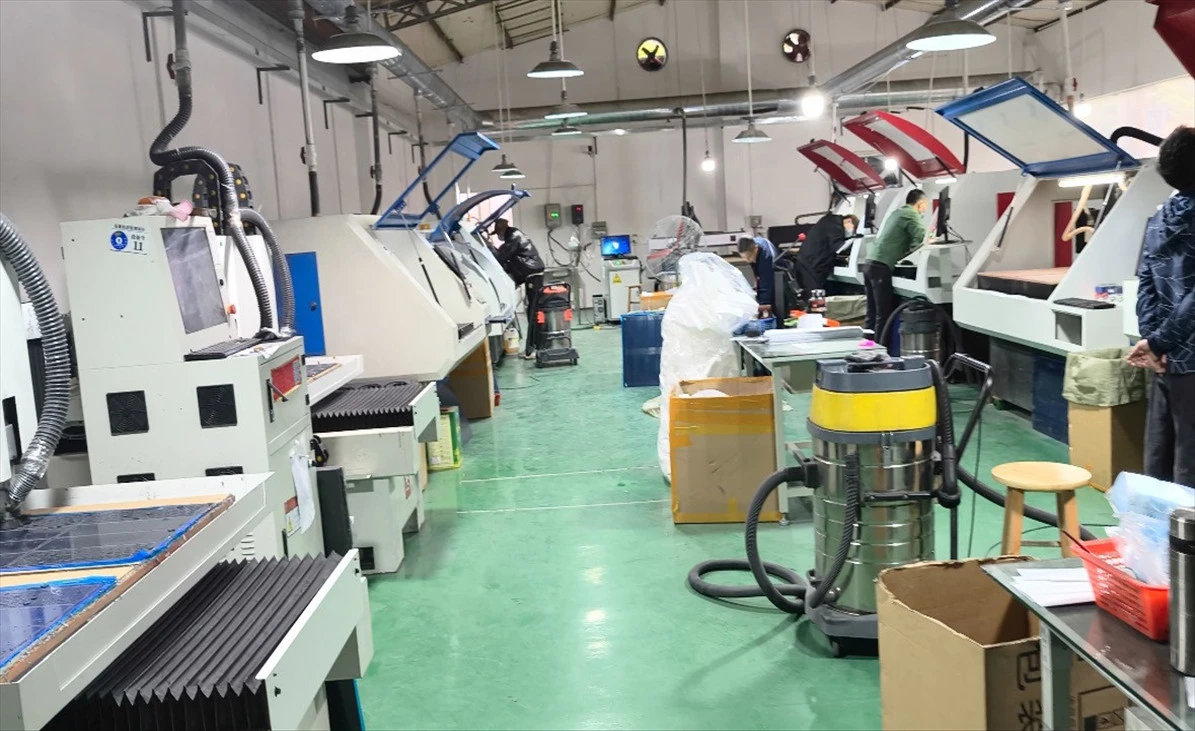
Production floor — the operation running at the time of the photograph
STAGE 01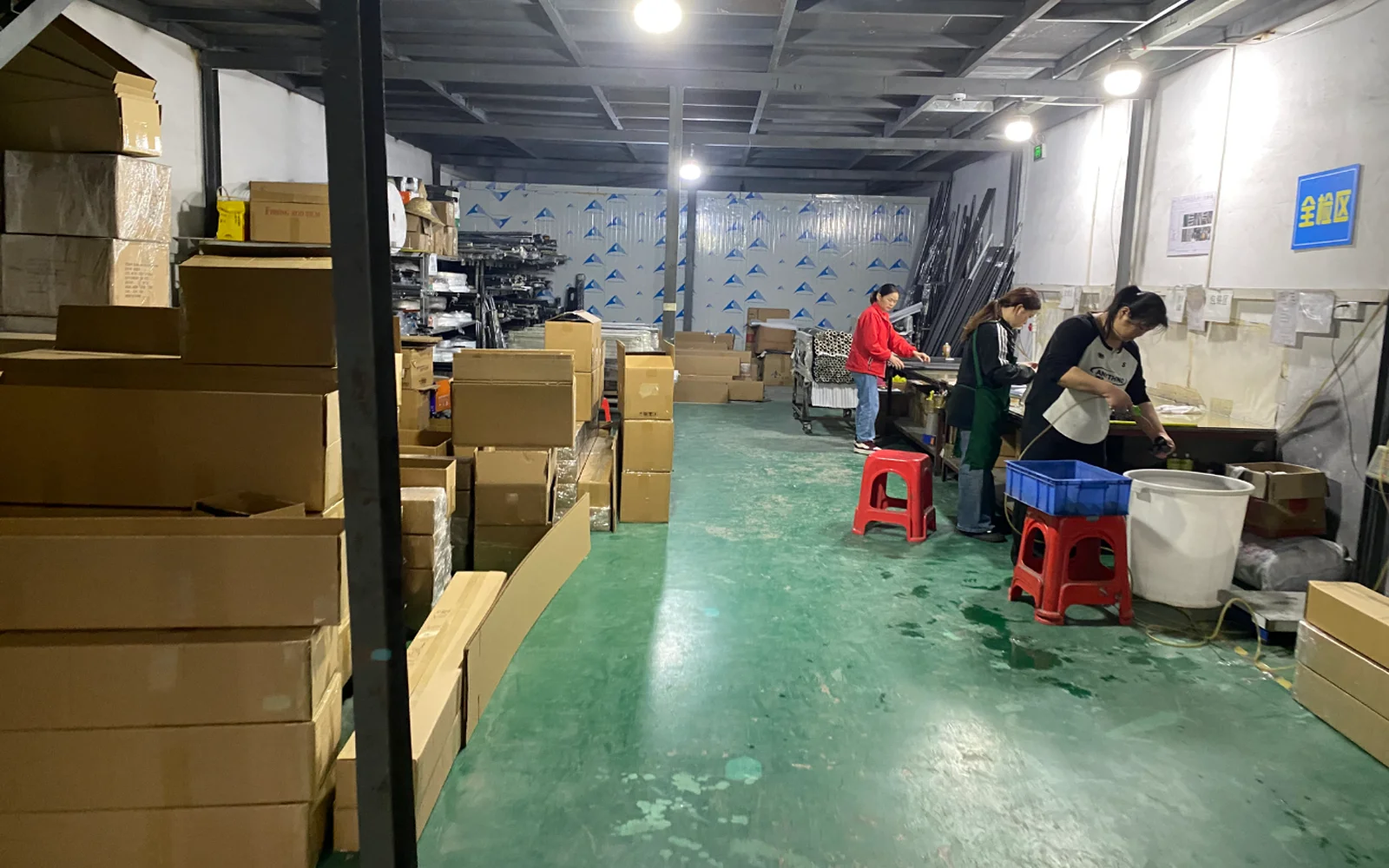
Production floor — the operation running at the time of the photograph
STAGE 01What happens here
- Geometry review — internal corners, thin webs, unsupported cutouts, impossible tolerances.
- Load case review — where does the force go, and what has to be stiff.
- Batch review — what route makes sense at your volume, and what the tooling implies.
What you receive
A written DFM response. Nothing is quoted before this is done, and it costs you nothing.
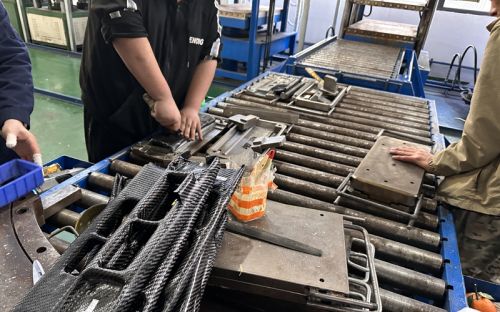
Forming — the part coming out of the tool
STAGE 02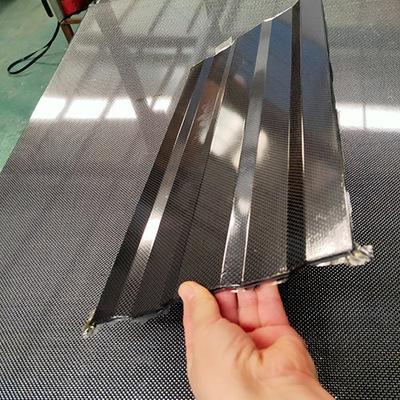
Forming — the part coming out of the tool
STAGE 02What happens here
- Ply orientation chosen from the load path, not from a default schedule.
- Material grade selected against stiffness and temperature — T300 for general work, T700 for structural and appearance parts.
- Cure cycle planned with the process route in mind.
What you receive
A ply plan and material specification. This is the document your own engineering team can review.
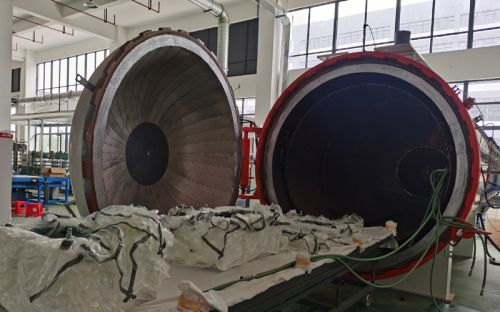
Autoclave curing — the vessel that holds the part to temperature and pressure
STAGE 03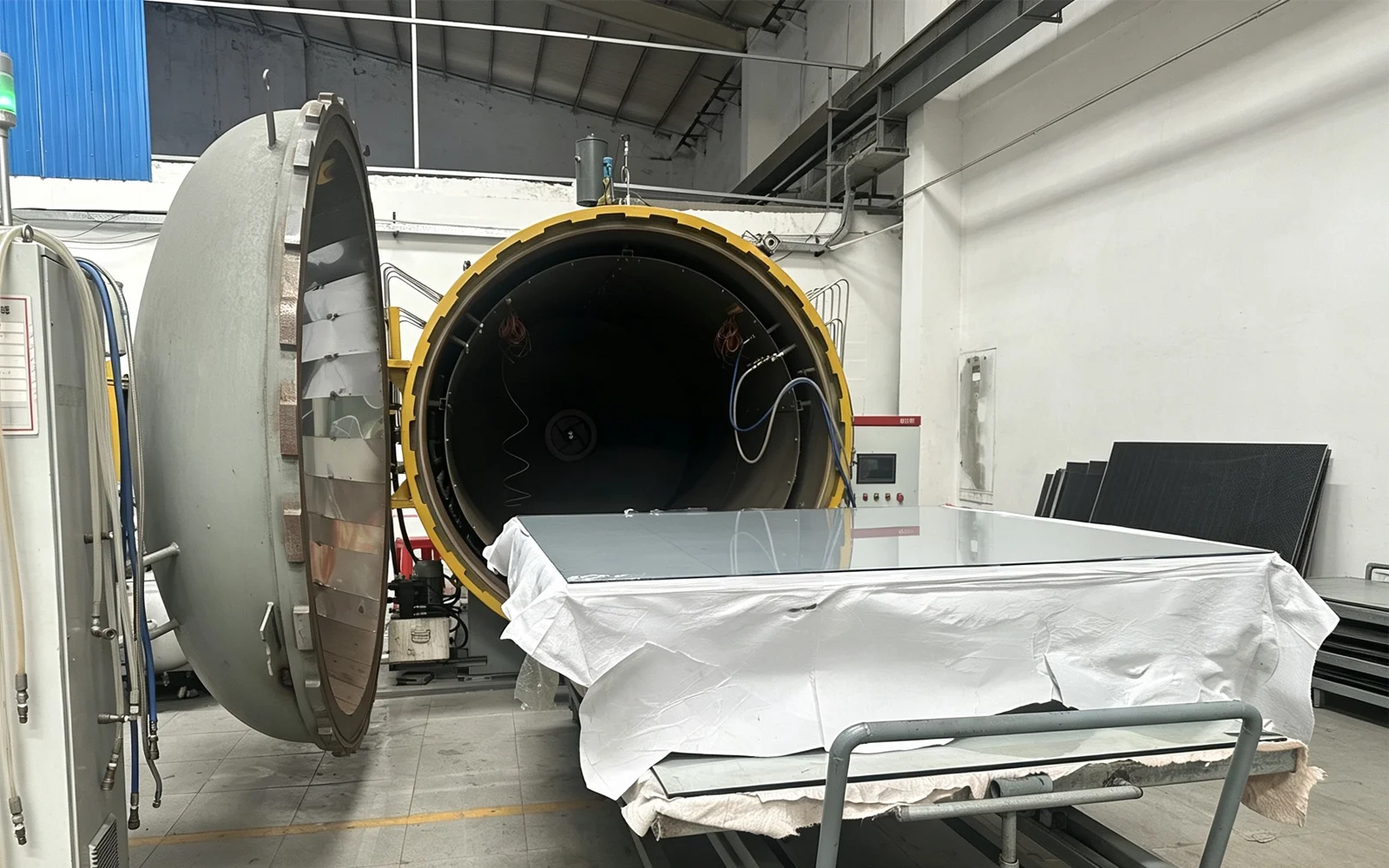
Autoclave curing — the vessel that holds the part to temperature and pressure
STAGE 03What happens here
- Layup and consolidation to the planned schedule.
- Hot press, autoclave and compression moulding, chosen by part and volume.
- Roll-wrapping for tube, pultrusion for constant section.
What you receive
The formed part, with its batch number, going into inspection rather than straight to despatch.
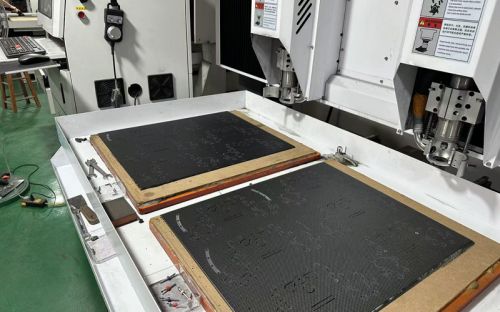
CNC machining — profiles and hole positions cut to the drawing
STAGE 04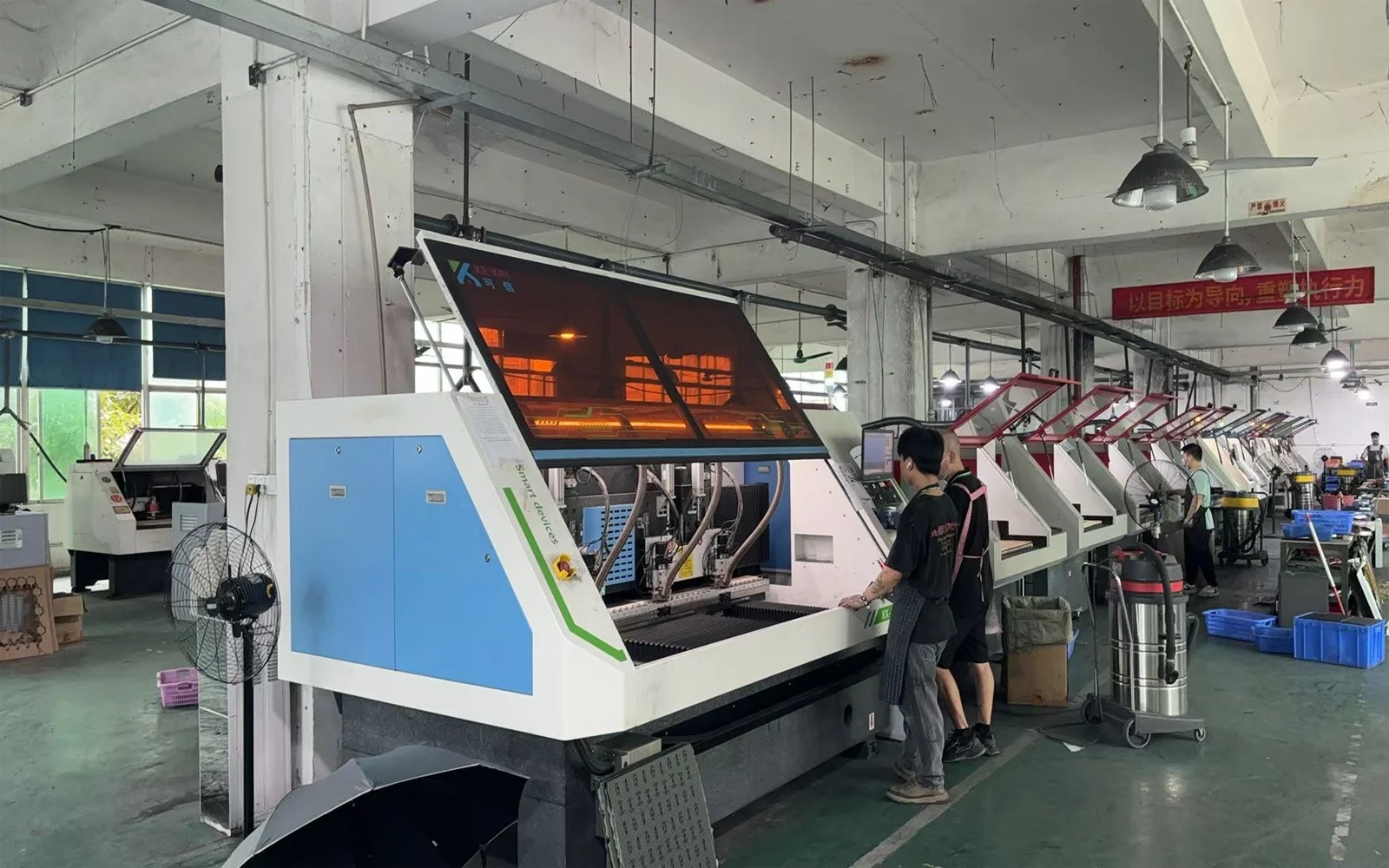
CNC machining — profiles and hole positions cut to the drawing
STAGE 04What happens here
- Entry edge and backing support treated as part of the process, not an afterthought.
- Hole positions and profiles held against the drawing revision.
- Isolated, filtered machining — carbon dust is conductive and it is a health matter.
What you receive
Machined components with the critical dimensions recorded, ready for inspection.
Production floor — the operation running at the time of the photograph
STAGE 05
Production floor — the operation running at the time of the photograph
STAGE 05What happens here
- Critical dimensions measured against your drawing revision, with CMM data where the tolerance needs it.
- Surface and edge condition checked visually under 10× magnification.
- Batch number issued, tracing back to material lot, machine, operator and cure record.
What you receive
A first article report for the first batch, and a batch record for every one after it.
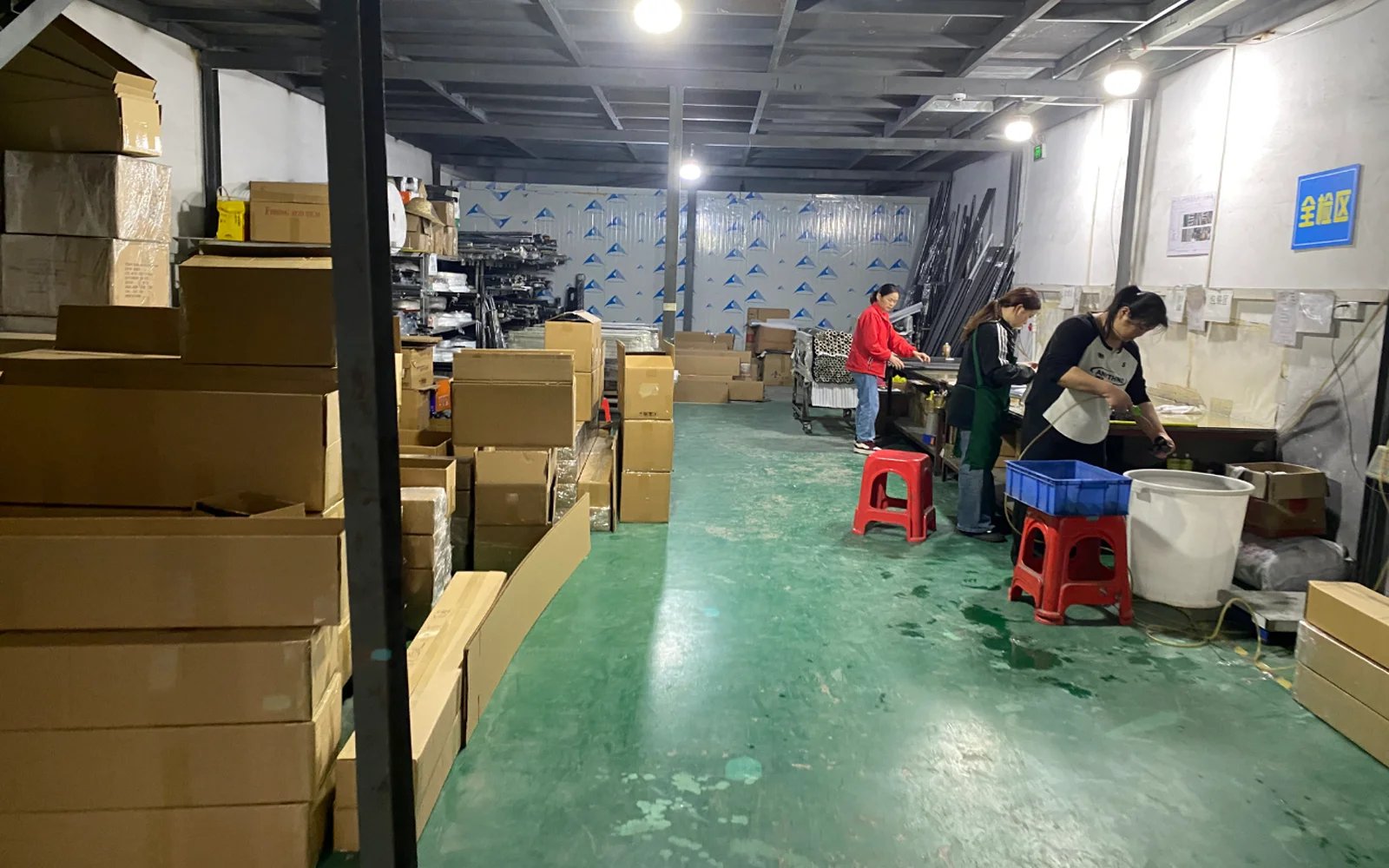
Inspection and despatch staging — every piece checked before it leaves
STAGE 06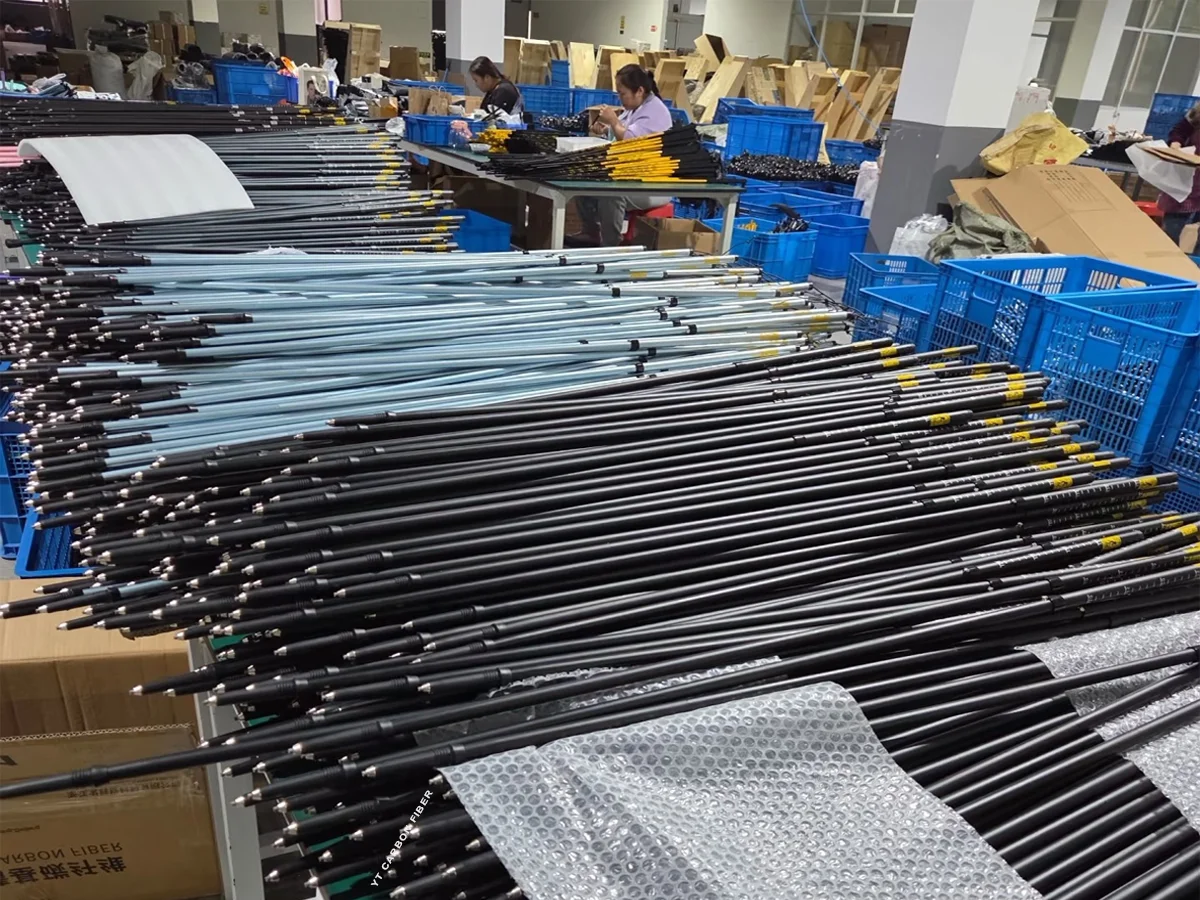
Inspection and despatch staging — every piece checked before it leaves
STAGE 06What happens here
- Pieces packed to avoid transit damage — composite edges bruise more easily than they look.
- Feedback from your assembly or test team recorded against your batch.
- Adjustments carried into the next batch, with the reason noted.
What you receive
A supplier relationship that improves on the second delivery rather than repeating the first.