Not industries — situations. Each one below is written the same way: the condition you are in, what it costs you now, how the material options compare, and the point at which carbon fibre is the wrong answer.
The mass budget was set by physics and then eaten by the material choice. This is the most common reason a carbon fibre enquiry starts — and the one where the saving is easiest to quantify.
UAV manufacturers · robotics · industrial equipment
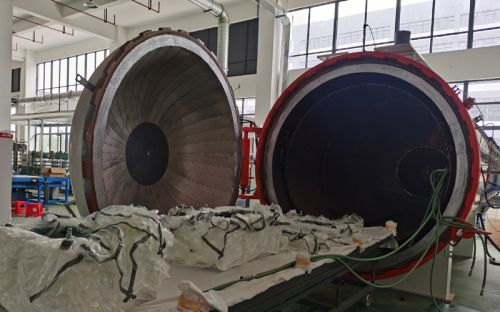
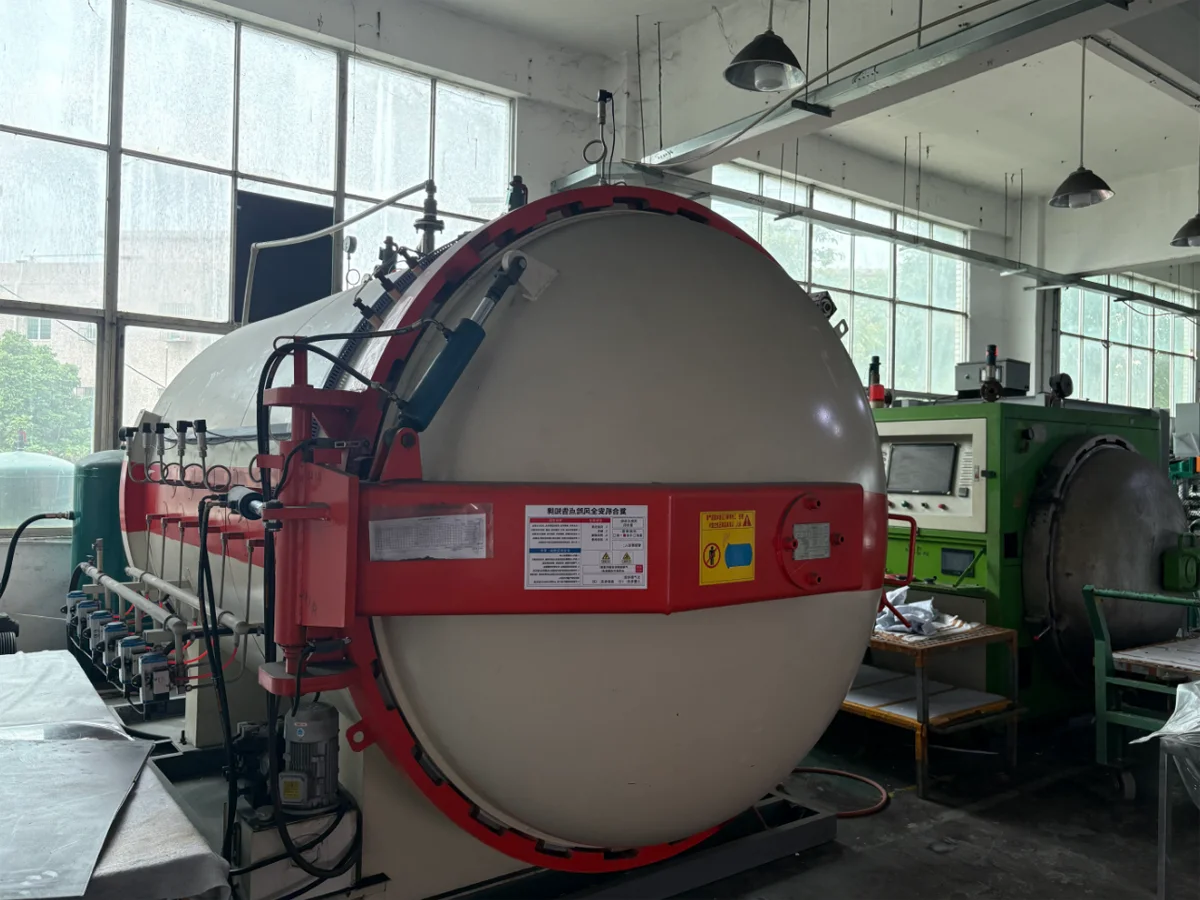
Autoclave processing workshop — the cure cycle for a structural part.
STAGE 03
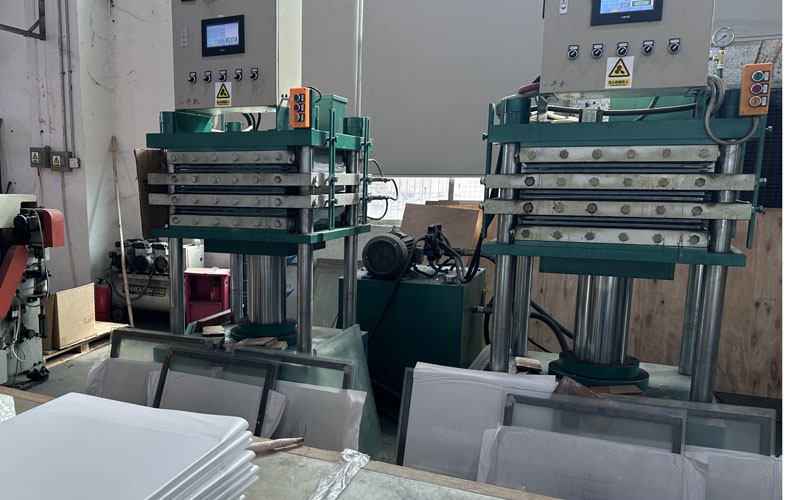
Hot press production line in operation.
STAGE 03
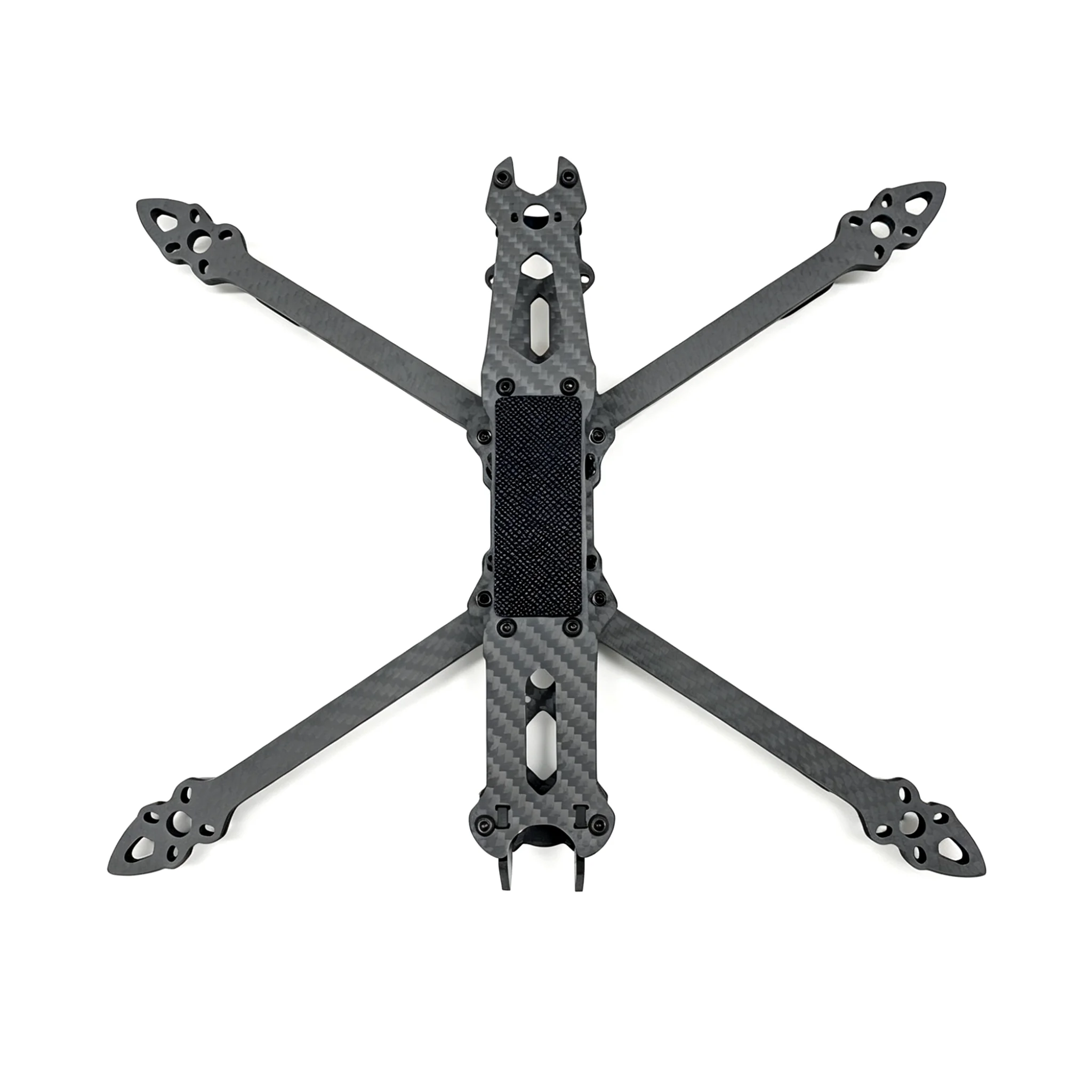
Unmanned aircraft frame components laid out for assembly.
PRODUCTEvery gram removed from a rotating structure is a gram of payload you can carry, or a unit of flight time you get back.
Aluminium carries the load and the heat, and it does both badly at once. That is the inefficiency carbon fibre removes.
The honest answer depends on the load case, the layup and the joint design. A number without those three is a guess.
| Option | What it means for you |
|---|---|
| Aluminium | Good conductivity, cheap, easy to machine. Heavy for its stiffness, and it moves when it warms up. |
| Steel | Stiff and strong, very heavy, hard to machine, and it will rust in an outdoor application. |
| Glass fibre | Cheap and light, but low stiffness and it fatigues faster. A good choice for covers, poor for load paths. |
| Carbon fibre | Highest specific stiffness and fatigue resistance. Expensive per part, and the joint design is the part people get wrong. |
We start from the load path, not the shape. Which direction does the force travel, is it a bending load or a shear load, and where does the part connect to something rigid. The ply stack follows that answer, and the mass saving follows the ply stack.
We report the calculated mass of the proposed stack against your current part, with the material assumed stated, so the comparison can be checked rather than taken on trust. The first batch carries a first article report with measured critical dimensions against your drawing revision, and a video factory walk-through is available before you commit.
If the part is not load-bearing — a cover, a shroud, a housing — carbon fibre may cost more than it saves. We say so before you order.
A very light part with a poor bolted joint can be worse than the aluminium it replaced. We review the joint before we quote the part.
Carbon fibre barely changes with temperature, but the adhesive or resin in the joint does. High-temperature service needs a different approach.
Send us your current part, the material it is made in, and the weight you need to hit. We will tell you the realistic saving and what it takes to get there.
The part passes a static load test and fails in service. That gap between "strong enough" and "stiff enough" is where most composite disappointments come from — and it is a layup problem, not a material problem.
Precision assembly · fixtures · jigs · metrology equipment
Machined components — hole positions and profiles held against the drawing.
STAGE 04
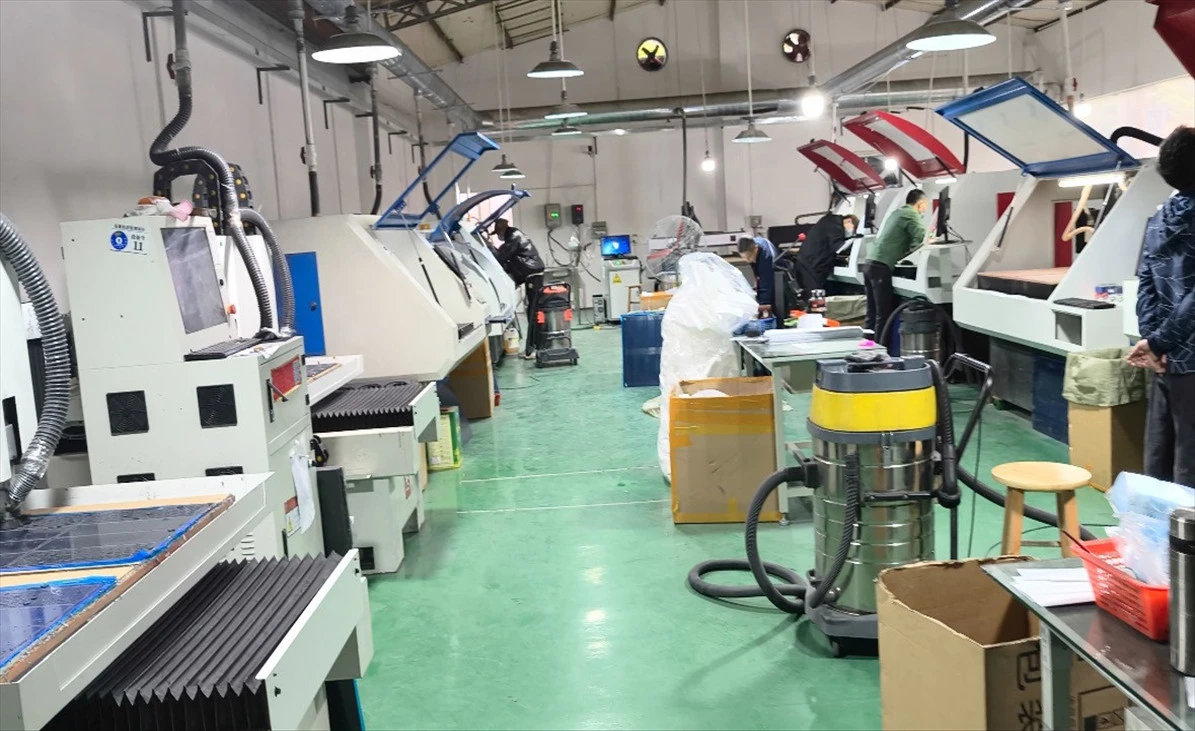
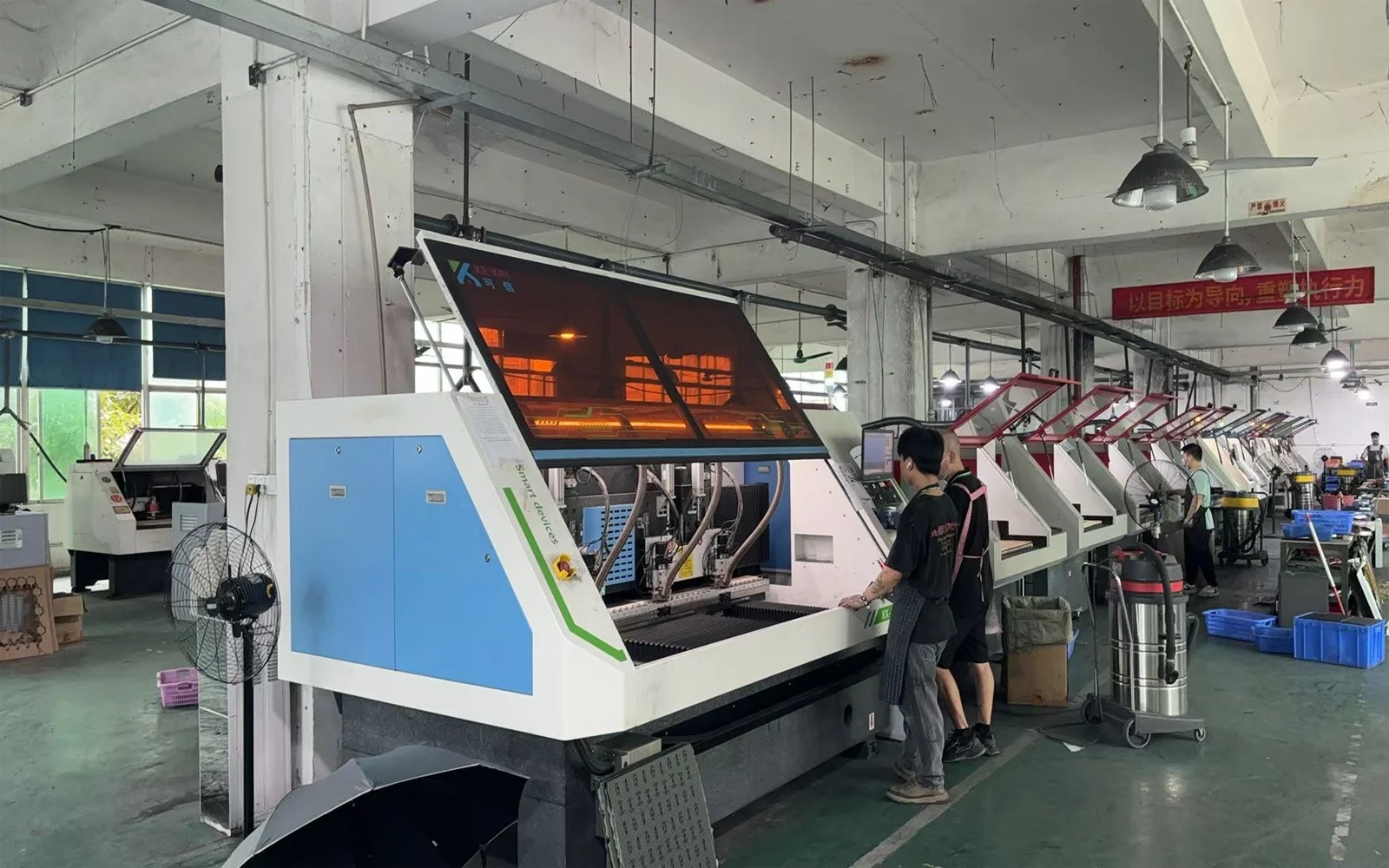
Production floor — the operation running at the time of the photograph.
STAGE 03
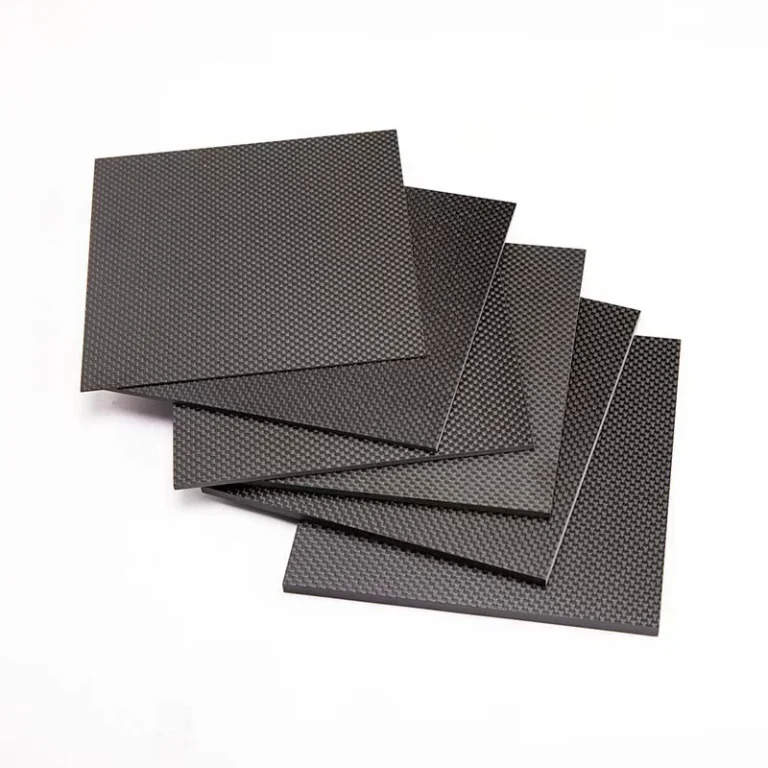
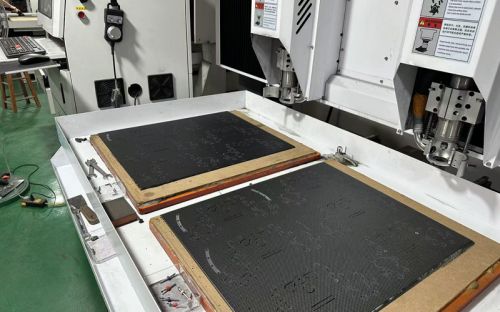
Flat panels machined to the drawing before finishing.
PRODUCTA flat plate with a loose hole pattern distorts the moment it is machined. The fix is stacking and support, not a harder material.
A jig that flexes is worse than no jig, because it looks like it is holding the part.
Strength and stiffness are different properties. A stronger laminate that is still soft will deflect the same.
| Option | What it means for you |
|---|---|
| Same material, wrong direction | Off-axis plies give you strength in two directions but reduce stiffness along the axis. This is the most common cause of a part that is "strong but soft". |
| Unidirectional only | Maximum stiffness along one axis, poor in others. Correct for a single load direction, wrong for anything else. |
| Nominal thickness | Adding material increases weight and cost without necessarily increasing stiffness where the load actually is. |
| Designed layup | Plies placed where the force travels, in the direction of the load. Lighter and stiffer at the same time. |
This is the part of the job that has to be done on paper before anyone touches fabric. We work from your load case to a ply schedule, then confirm that the machining and bonding steps do not undo it. The written output is a layup plan you can hand to your own engineering team.
First article report records the critical dimensions of your part against your drawing revision, so a stiffness question is answered with measurements rather than an opinion. Every tolerance on this drawing is quoted with its measurement method and the instrument used, and a video factory walk-through is available before you commit.
There are hole positions and flatness values a laminate cannot hold. We tell you which dimension has to move and by how much.
A carbon part that has to be bolted to a rigid structure usually needs a metal insert. That is a design decision, and we make it explicit.
Static stiffness and fatigue life are different tests. We need your cycle count and load range before we commit to a stack.
Tell us the dimension that is drifting, the load that causes it, and how many cycles it has to survive. That is enough for us to propose a stack.
One piece made by hand is not a product. Everything about how this becomes repeatable — tooling, cycle time, batch consistency — has to be designed at the same time as the part.
Automotive · consumer products · industrial OEM
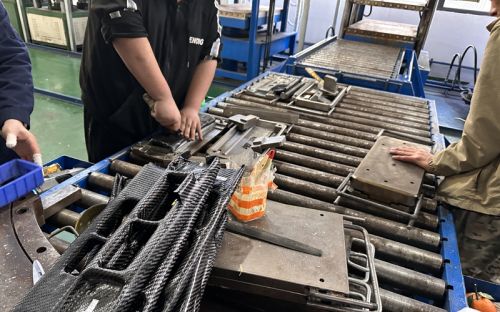
Parts released from the press.
STAGE 03
Formed components after finishing.
PRODUCT
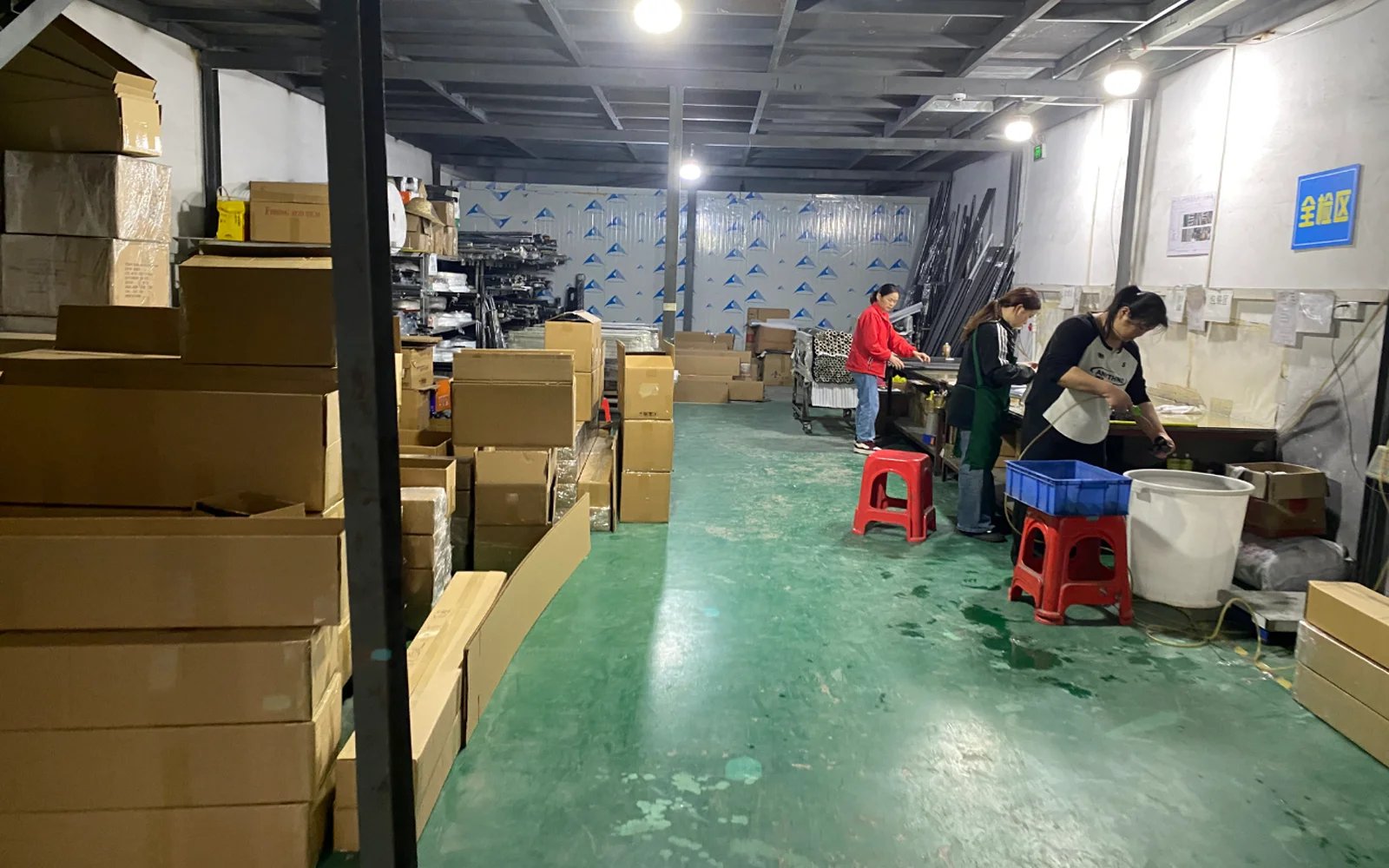
Inspection and packing before the batch leaves the floor.
STAGE 05Labour-intensive forming and machining means the price never comes down as the quantity goes up.
Hand-formed parts vary. Once your customer notices that variation, they ask for inspection on every piece.
Tooling is the biggest single cost in a moulded part, and it is decided in the first conversation, not the last.
| Option | What it means for you |
|---|---|
| Machined from plate, every time | No tooling. Flexible. But the cost per piece stays high, so it only works at low volume. |
| Vacuum bagging, hand laid | Good for prototypes and small batches. Cycle time and consistency both depend on the operator. |
| Compression moulding | Fast, repeatable, and the route that makes volume work. Requires a tool and a defined batch. |
| Pultrusion | The cheapest per metre for a constant section, at high volume. Fixed section only. |
We tell you the volume at which each route starts to make sense, and what the tool costs to get there. If your expected volume is below that threshold, we will recommend a different route — including machining from plate, which needs no tool at all.
Batch numbers on every delivery, so you can see that this batch and the last one came off the same controlled process. The first batch is accompanied by a first article report, and a video factory walk-through or a physical audit is available before you place a volume order.
A complex part at low volume is a bad use of moulding. We will tell you the volume at which it changes.
Pultrusion cannot do that. If your profile varies, it is a formed or machined part.
Tool polish level, gate marks and surface finish need to be agreed before the tool is cut, not after.
Give us your target annual volume and your current unit cost. We will tell you which process reaches it and what the tooling step is.
The most useful thing a composite supplier can do is say no early. A design review that catches three unmanufacturable features before the first sample saves more money than any price negotiation afterwards.
Product designers · engineers · procurement at any stage
Complex profiles machined from formed blanks.
PRODUCT
Profiled panels cut from sheet material.
PRODUCT
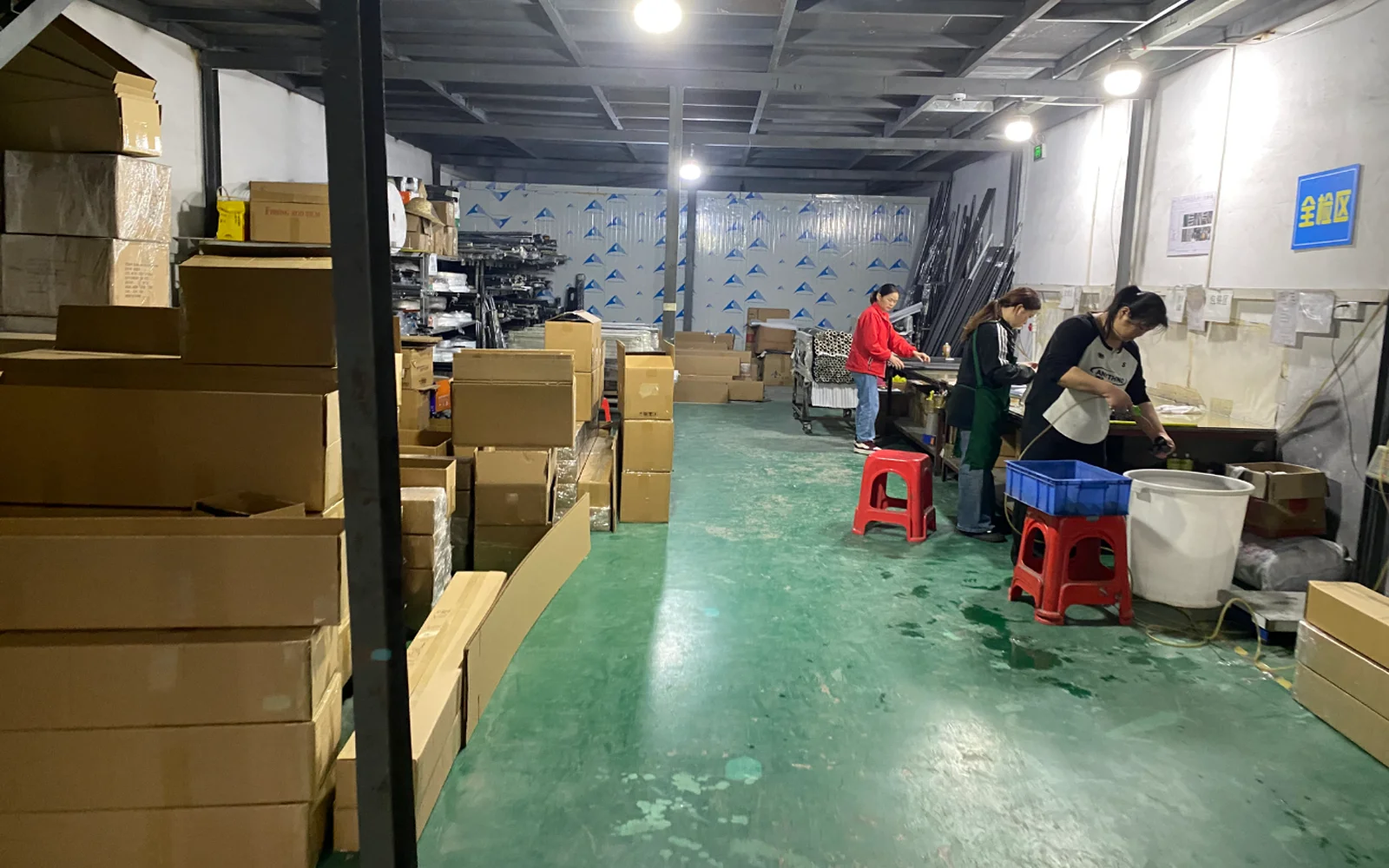
Inspection and packing area on the floor.
STAGE 05Internal corners, thin webs, deep pockets and impossible hole tolerances are all common in a design that has never been made.
The material is a consequence of the load and the temperature, not a starting point.
Price without a process route behind it is not a comparison. Two quotes for the same drawing can be two different products.
| Option | What it means for you |
|---|---|
| A number with no route | Cheap to produce and impossible to reproduce. You find out at the second batch. |
| A number with a route | The process, the material, the tolerance method and the inspection points are all stated, so the quote can be compared like for like. |
We review the drawing against four things: the load case, the geometry, the tolerance method and the batch size. Where a feature cannot be made as drawn, we say which dimension has to move. That review is free and it happens before any quotation.
A written DFM response: can it be made, in what process, with what material, at what tolerance, and which drawing features need to change. Dimensional tolerances are stated with their measurement method, the first batch comes with a first article report, and a video factory walk-through is available before you commit.
We can look, but we cannot commit to anything. A photo with no load case gets you a conversation, not a price.
Early drawings are welcome — but we will describe what we would need to change, rather than pretending it can be made as-is.
We will not compress the process to hit a date. We will tell you what the honest date is.
Send the 2D or 3D file and, if you have it, the duty case. If you only have a photo, describe what it does. Either way you get an engineering answer first.
These four cover what we see most. Everything else starts with the same conversation: describe where the part is failing, and we will tell you whether carbon fibre helps.
Describe your case